
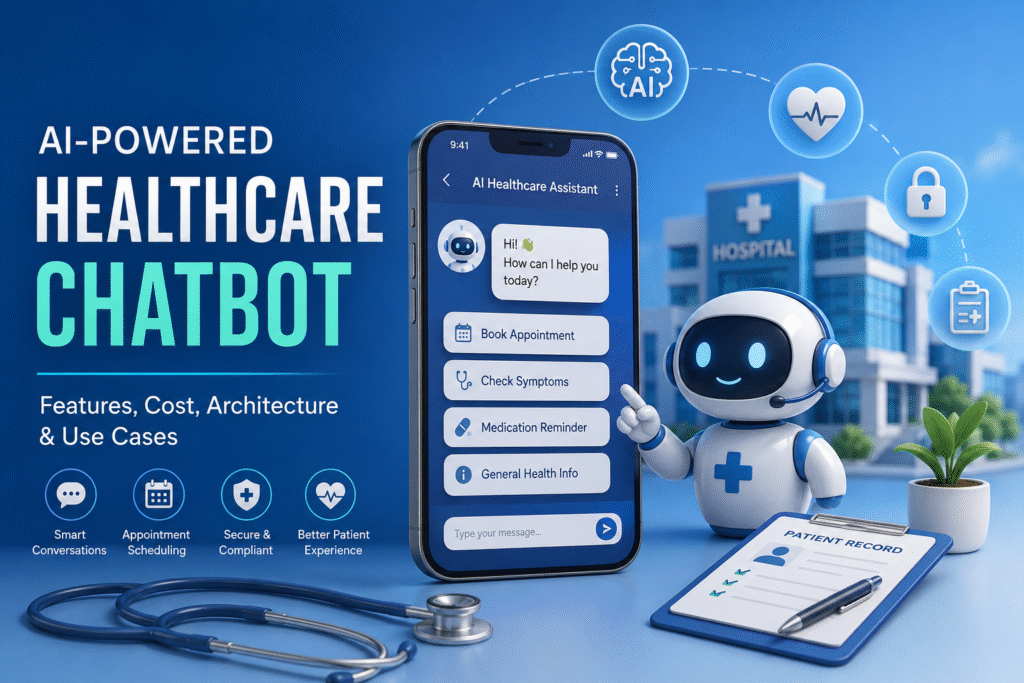
Healthcare is becoming increasingly digital, but patients still face many of the same problems: long waiting times, difficulty getting basic health information, appointment delays, and limited access to healthcare support outside working hours.
This is where an AI-powered healthcare chatbot can make a real difference.
Unlike a basic chatbot that simply follows predefined responses, an AI healthcare chatbot can understand natural language, answer common questions, collect patient information, assist with appointments, provide reminders, and guide users toward appropriate healthcare services.
However, building one is not as simple as connecting ChatGPT to a website. Healthcare involves sensitive patient information, safety concerns, privacy requirements, and sometimes strict regulatory considerations. For example, in the U.S., a third-party AI chatbot that handles protected health information (PHI) on behalf of a healthcare provider may be considered a business associate under HIPAA.
So, how do you actually build one?
Let’s break it down.
What Is an AI-Powered Healthcare Chatbot?
An AI-powered healthcare chatbot is a software application that uses technologies such as artificial intelligence (AI), natural language processing (NLP), machine learning, and large language models (LLMs) to communicate with patients or healthcare professionals.
Instead of navigating multiple pages or waiting for a staff member, a patient can simply type:
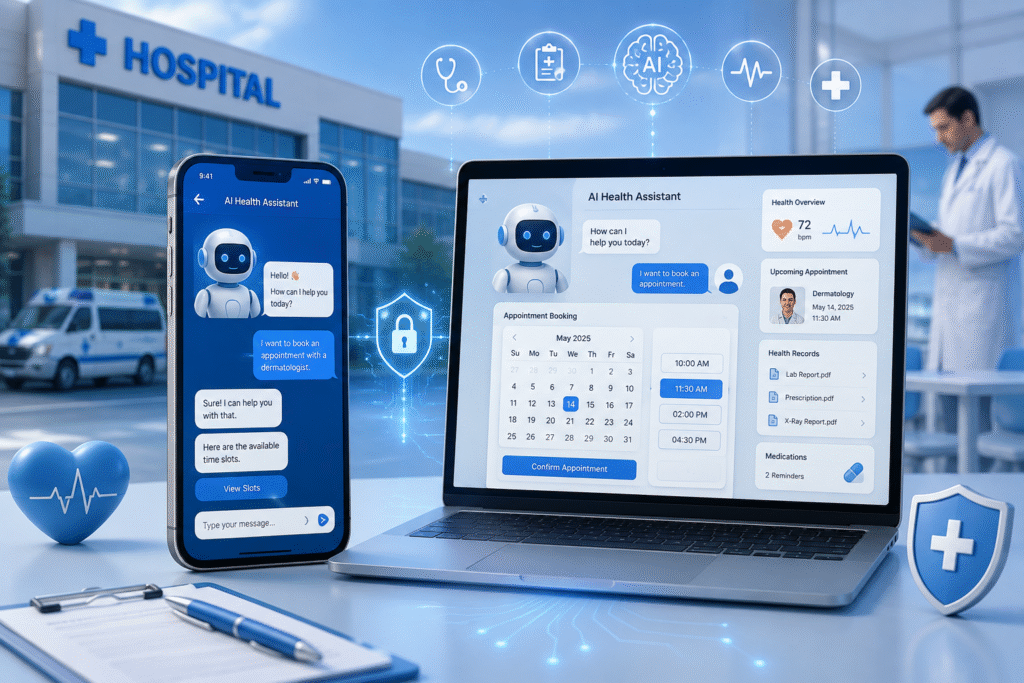
“I want to book an appointment with a dermatologist.”
The chatbot can understand the request, check available options through the connected healthcare system, and guide the patient through the booking process.
Depending on its purpose, a chatbot can be designed for patient support, administrative tasks, health education, appointment management, or clinical decision support.
It is important to distinguish these functions. A chatbot that schedules appointments has a very different risk profile from software that provides diagnostic recommendations. The FDA’s current digital-health guidance specifically distinguishes different types of clinical decision-support and AI-enabled medical software.
Key Features of an AI Healthcare Chatbot
The features you include will depend on whether the chatbot is designed for a hospital, clinic, telemedicine company, health insurance provider, or healthcare application.
Some of the most useful features include:
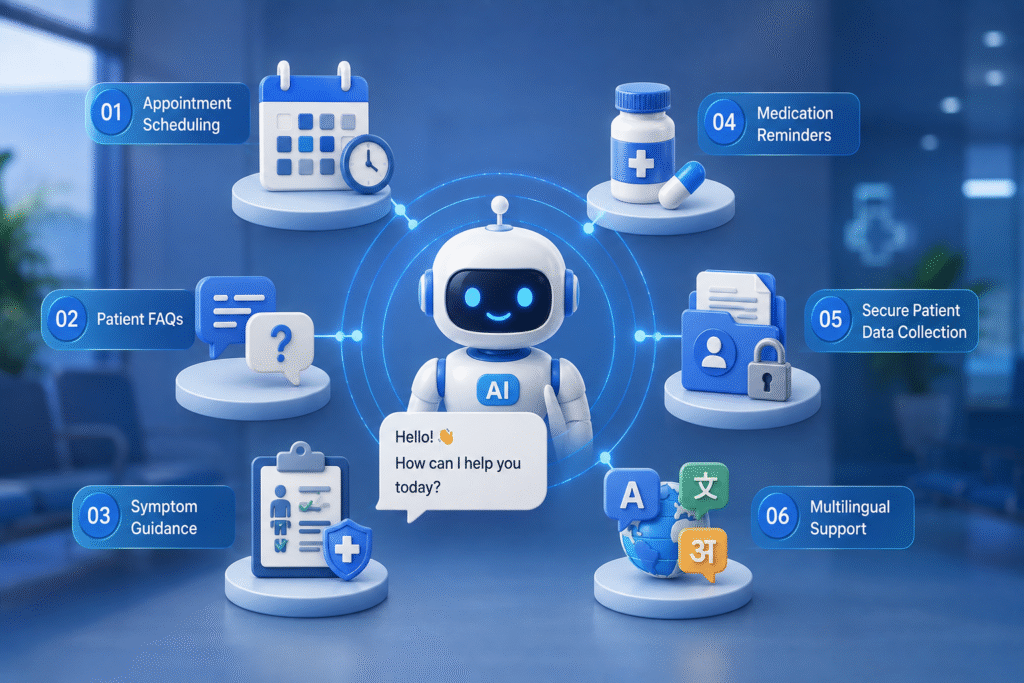
1. Patient FAQs
The chatbot can answer frequently asked questions about:
- Hospital services
- Doctors and departments
- Visiting hours
- Insurance
- Medical procedures
- Preparation instructions
- General health information
This reduces the number of repetitive questions handled by support staff.
2.Appointment Scheduling
Patients can use the chatbot to find available doctors, select a suitable time, book appointments, and receive confirmations.
The chatbot can connect with an existing hospital management system, appointment platform, or EHR/EMR system through APIs.
3. Symptom Guidance
A more advanced chatbot can ask users about symptoms and provide general guidance about possible next steps.
However, this feature needs careful design. The chatbot should not confidently diagnose a patient or replace a qualified healthcare professional.
For high-risk use cases, developers need appropriate clinical validation, monitoring, safety controls, and potentially regulatory review. The FDA notes that AI-enabled medical software can introduce unique safety and effectiveness considerations.
3. Medication and Appointment Reminders
Chatbots can remind patients about:
- Medication schedules
- Upcoming appointments
- Follow-up visits
- Routine checkups
- Preventive healthcare activities
5. Patient Data Collection
Instead of asking patients to complete long forms manually, the chatbot can collect basic information conversationally and transfer approved information into the appropriate healthcare system.
6.Multilingual Support
Healthcare organizations often serve patients who speak different languages. AI-powered chatbots can provide multilingual conversations and make healthcare information easier to access.
AI Healthcare Chatbot Architecture
A reliable healthcare chatbot usually consists of several layers rather than a single AI model.
A simplified architecture looks like this:
User Interface → Backend/API → AI Layer → Healthcare Data & Systems
1. User Interface
This is where patients interact with the chatbot.
It could be:
- Website chatbot
- Mobile application
- Patient portal
- WhatsApp or messaging interface
- Voice assistant
2. Backend
The backend manages authentication, conversations, business logic, API requests, user permissions, and data processing.
Common technologies can include Node.js, Python, Java, PHP, or Laravel, depending on the existing technology stack.
3. AI/NLP Layer
This is the intelligence behind the chatbot.
Depending on the project, developers may use:
- Large language models
- NLP models
- Retrieval-augmented generation (RAG)
- Intent classification
- Speech-to-text
- Text-to-speech
RAG can be particularly useful when the chatbot needs to answer questions using an organization’s approved medical documents, policies, FAQs, or healthcare knowledge base.
4. Healthcare System Integration
The chatbot may need to communicate with:
- EHR/EMR systems
- Hospital management systems
- Appointment systems
- Patient portals
- Insurance systems
- CRM platforms
- Payment systems
How Much Does an AI Healthcare Chatbot Cost?
The cost of building an AI healthcare chatbot depends on its features, integrations, security requirements, and complexity. A basic chatbot for FAQs may cost less, while an advanced solution with appointment booking, patient data integration, and AI-powered assistance can require a much larger investment.
A rough estimate is:
- Basic chatbot: $5,000–$15,000
- Medium-complexity chatbot: $15,000–$40,000
- Advanced healthcare chatbot: $40,000+
Apart from development, businesses should also consider ongoing costs such as AI API usage, cloud hosting, maintenance, security, and updates.
Common Use Cases
AI healthcare chatbots can be useful in several areas, including:
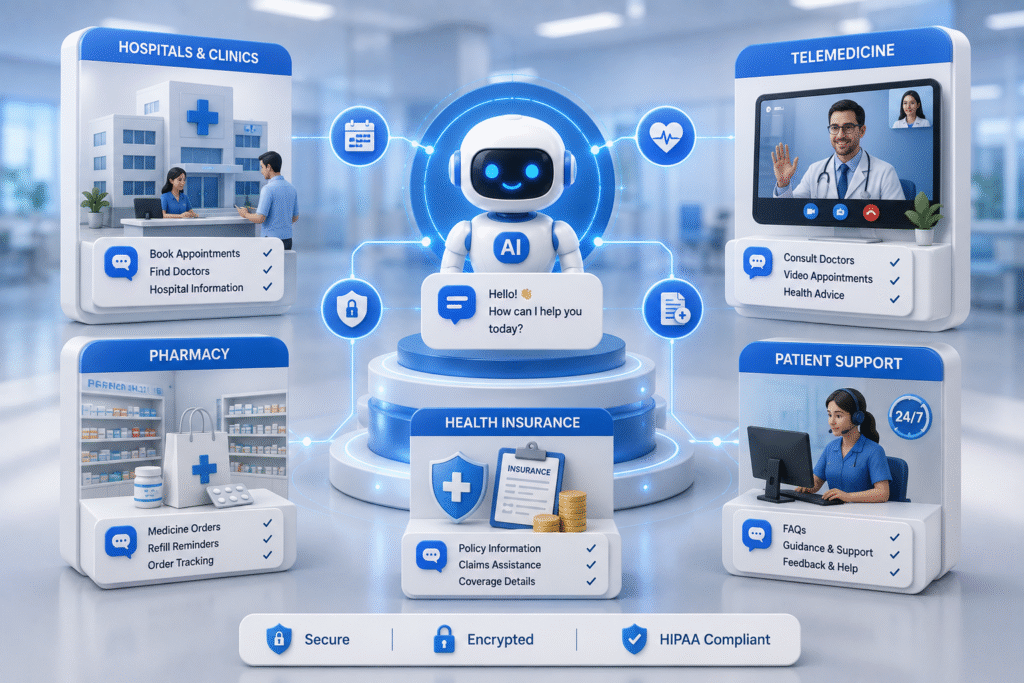
- Hospitals & Clinics: Answer patient questions and help with appointment scheduling.
- Telemedicine: Collect basic patient information and guide users to the right service.
- Health Insurance: Answer questions about policies, claims, and coverage.
- Pharmacies: Help with refill requests, order updates, and general information.
- Patient Support: Provide health education and post-appointment assistance.
Security and Compliance
Healthcare chatbots can handle sensitive patient information, so security and privacy should be a priority from the beginning.
Important considerations include:
- Data encryption
- Secure authentication
- Role-based access
- API security
- Audit logs
- Data privacy
- Human escalation
For applications handling protected health information in the U.S., organizations may also need to consider HIPAA requirements and other applicable regulations.
Most importantly, a healthcare chatbot should not blindly replace medical professionals. For health-related or clinical use cases, responses should be carefully tested, monitored, and designed with appropriate human oversight.
Final Thoughts
An AI-powered healthcare chatbot can help healthcare organizations improve patient communication, automate repetitive tasks, and make services more accessible.
However, building a successful chatbot is about more than choosing an AI model. The right combination of AI, healthcare integrations, security, reliable information, and user-friendly design is what makes the solution valuable.
Starting with a simple use case, such as FAQs or appointment scheduling, can be a practical way to introduce AI before moving toward more advanced healthcare capabilities.
AI should support healthcare professionals—not replace them.