

Validate your app idea before development —it could be the smartest decision you make as a founder. Most app ideas never make it to market. Not because they were bad ideas — but because the people behind them spent months and lakhs of rupees building something before checking whether anyone actually wanted it. It’s one of the most common and painful mistakes in the startup world. You get excited about an idea, you hire a developer, you build the whole thing — and then crickets. No users, no traction, no return on all that time and money. The good news? There’s a smarter way. Validating your app idea before development means you find out early — cheaply, quickly — whether your idea has real potential. And it can save you from one of the most expensive mistakes a founder can make. Here’s exactly how to do it.
First, Understand Why You Should Validate Your App Idea Before Development
Validating an app idea doesn’t mean asking your friends if they think it’s cool. Friends are supportive by default. They’ll say yes even when they wouldn’t actually pay for or use the thing. Real validation means finding evidence — from strangers, from data, from behaviour — that a specific group of people has a problem your app solves, and that they’re willing to do something about it. Pay for a solution. Sign up for a waitlist. Change how they currently work. Without that evidence, you’re building on assumptions. And assumptions are expensive. Learning to validate your app idea before development helps you make decisions based on evidence instead of assumptions. Once you’ve validated your idea, the next step is building an MVP that helps you test your solution with real users. Learn more in our guide on Building an MVP: The Smart Way Every Startup Should Launch.

Step 1 — Validate Your App Idea Before Development by Defining the Problem
Before anything else, write down the problem your app solves in one sentence. Not the features. Not the technology. The problem. If you struggle to do that in one sentence, that’s your first signal to slow down. The clearer the problem, the easier validation becomes — because you know exactly who to talk to and what to ask. Ask yourself: who has this problem right now? How are they currently dealing with it? What’s frustrating about the way they’re handling it today? These questions matter more at this stage than anything technical.
Step 2 — Validate Your App Idea Before Development Through Customer Interviews
This step feels uncomfortable for most founders. Talking to strangers about your idea, before you have anything to show, can feel premature. Do it anyway. Find 10 to 15 people who match your target user. Reach out through LinkedIn, local communities, WhatsApp groups, or just people you know in that industry. Ask them about their current problem — not about your solution. Listen more than you talk. The best way to validate your app idea before development is by talking to real users instead of relying on assumptions.
What you’re looking for in these conversations:
Do they actually have the problem: or did you assume they did?
How often does it affect them: daily frustration or occasional inconvenience?
What are they currently doing about it: spreadsheets, manual work, a competitor’s tool?
How much is the problem costing them: in time, money, or stress?
If most people shrug and say the problem isn’t a big deal, that’s important information. If they lean forward and say “yes, this drives me crazy every single week” — that’s the signal you’re looking for.

Step 3 — Validate Your App Idea Before Development Without Building the App
Here’s something most people don’t realise: you can test whether people want your app without actually building it. Seriously. You don’t need to build a full product to validate your app idea before development.
Build a simple landing page
Create a one-page website that describes what your app does and what problem it solves. Add a “Join the waitlist” or “Get early access” button. Run a small amount of paid traffic to it — even ₹5,000 to ₹10,000 on Google or Instagram ads. If people sign up, that’s real validation. If nobody clicks, you’ve learned something important for almost no money.
Use a prototype or mockup
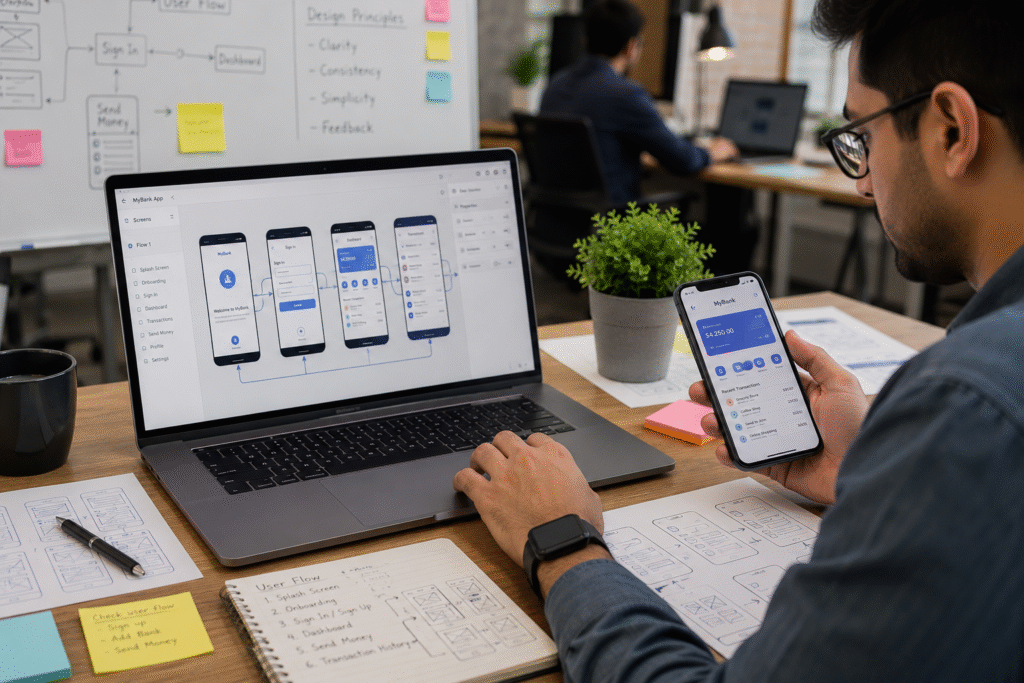
Tools like Figma let you create a clickable prototype that looks and feels like a real app — without any actual development. Show it to potential users. Watch how they interact with it. Ask what confuses them and what makes sense. You’ll learn more from one hour of user testing than from weeks of building.
Offer the solution manually first
If your app automates a service, try delivering that service manually to a small group of users first. Do the work by hand, using spreadsheets or WhatsApp or email. If people find it valuable and come back for more, you have proof of demand. Now you know it’s worth automating.
Step 4 — Validate Your App Idea Before Development Through Competitor Research
A lot of founders get nervous when they find competitors. Don’t be. Competitors are actually a good sign — they confirm the market exists. The question is whether you can do it differently or better for a specific audience. Search the App Store, Google Play, and Product Hunt. Read the reviews of existing apps in your space. The one-star reviews are gold — they tell you exactly what users hate about current solutions. That’s your opening.
Step 5 — Set Goals to Validate Your App Idea Before Development
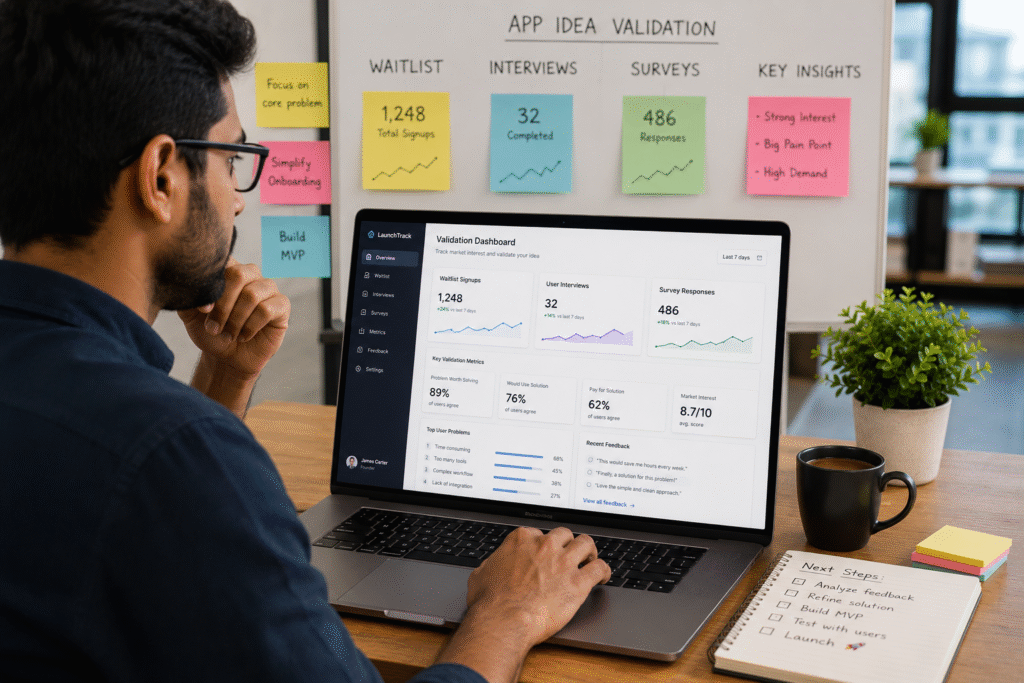
Before you start any of this, decide what “validated” looks like for you. Make it specific. “50 people sign up for the waitlist within 2 weeks.” “8 out of 10 users in interviews say they’d pay for this.” “3 people agree to pay in advance for early access.” Having a clear goal stops you from moving the goalposts when early results look uncertain. It also gives you something concrete to show a development partner or investor when you’re ready to build.
Build With Confidence, Not Just Hope
When you validate your app idea before development, you reduce risk, save money, and increase your chances of building a product that people actually want. Validation isn’t about killing your idea. It’s about making sure you build the right thing, for the right people, in the right way — before committing your full budget to development. The founders who skip this step often spend months and significant money building something that needs to be completely rebuilt after the first round of user feedback. The ones who validate first build faster, spend less, and launch with far more confidence. Take a few weeks. Talk to people. Test the idea cheaply. Then build — with real evidence behind you.

Ready to validate your app idea and build something people actually want?
We work with founders and small businesses to validate ideas, build MVPs, and launch apps without wasting budget on the wrong things. Book a free consultation — let’s look at your idea together and figure out the smartest path forward.
Get in touch today — no commitment, just an honest conversation about your app idea.