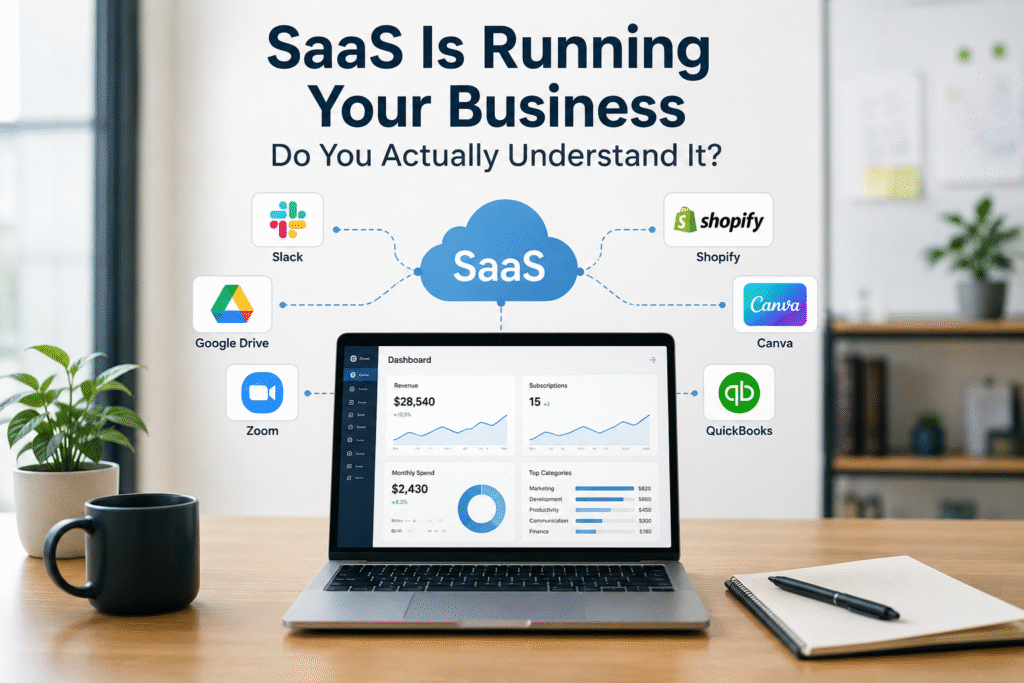
What is SaaS? Chances are, you’ve been using it every day without giving it much thought. Before lunch, you’ve probably checked your email, joined a video meeting, shared a file, or updated a project board—all powered by SaaS. I want you to think back to this morning. How many tools did you open before lunch? Not install. Not configure. Just… open. That’s SaaS, and it’s already deep inside how your business runs — whether you’ve consciously chosen it or not. The invoicing tool, the team chat, the file storage, the project board. At some point, the old way of doing things — buy software, install it, pray IT keeps it alive — just quietly stopped making sense. Nobody announced it. It just happened.
What Is SaaS? Everything You Need to Know
What is SaaS? SaaS stands for Software as a Service. It’s software you access through a browser, pay for monthly or annually, and never have to install or maintain yourself. You’ve been using it longer than you think. Gmail is SaaS. Shopify is SaaS. So is Zoom, Canva, QuickBooks Online, and probably the tool your team uses to track tasks. What makes something SaaS isn’t what it does — it’s how it reaches you. Over the internet, updated automatically, running on someone else’s servers. It’s one of the main reasons why businesses are moving everything to the cloud. That last bit — someone else’s servers — is where most of the actual value lives for business
Why SaaS Replaced the Old Way So Fast
Once you understand what is SaaS, it’s easy to see why it replaced the traditional software model so quickly. The software model that came before SaaS had problems people simply accepted because there was no better alternative. You paid a big upfront cost for software that was already a version behind by the time you installed it. Security patches came slowly, if at all. If your computer broke, you lost access until IT sorted it out. Sharing files between team members meant emailing attachments back and forth and losing track of which version was current. SaaS fixed all of that — not through better features necessarily, but through a completely different relationship between the user and the software. With SaaS, you pay a predictable monthly or annual fee. Updates roll out in the background — you don’t do anything, you just open the tool one day and it’s better. Your whole team works in the same environment simultaneously, seeing the same data in real time. And when something breaks, it’s the SaaS provider’s problem to fix, not yours. For a small business owner or a startup with no dedicated IT person, that shift is enormous. SaaS removed an entire category of maintenance overhead that used to quietly drain time and money.
What Is SaaS Really Costing Your Business? The Hidden Side of SaaS

Understanding what SaaS is also means understanding that it isn’t perfect. Here’s what most explainer articles usually skip: SaaS is genuinely great for the software you use regularly, but it can become a slow financial leak for everything else. Because SaaS is cheap to start — most tools offer free trials, low entry pricing, easy signup — it’s very easy to accumulate subscriptions you stop actively using. The $29/month tool you tried for a feature you needed once. The SaaS platform a former employee set up that nobody cancelled when they left. The analytics tool that sounded useful and now sits untouched for six months. Individually, none of these feel like a big deal. Together, they add up to real money and real organizational clutter. The discipline SaaS requires isn’t just picking the right tools — it’s regularly auditing what you’re paying for and cutting what you’re not using. Most businesses that do this audit are surprised by what they find.
Why SaaS Is Also the Default for Anyone Building Software Today
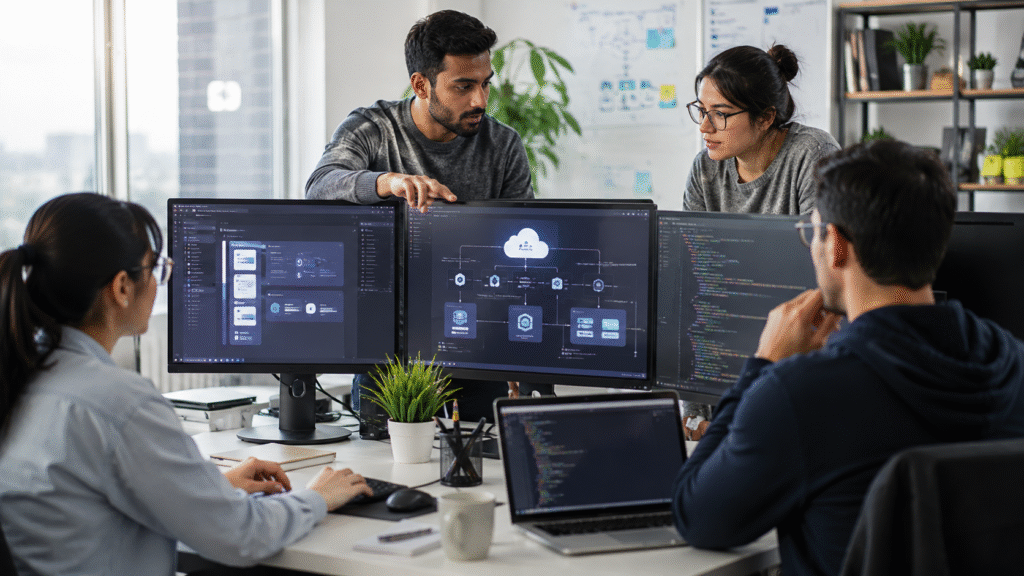
What is SaaS for developers and startup founders? It’s more than just a way to deliver software—it’s a business model that supports continuous improvement, recurring revenue, and long-term customer relationships. If you’re on the building side — a developer, a startup founder, a product team — SaaS is almost certainly where you’re headed, and for good reason. Recurring revenue is more predictable than one-time sales. SaaS lets you push improvements to every user at once instead of waiting for them to download an update. Support is easier because everyone’s on the same version. And the relationship with your customer becomes ongoing rather than transactional.
What is SaaS today? For most businesses, it’s simply the way software gets done. It’s become such a normal part of everyday work that we rarely stop to think about it.
The real question isn’t whether you should use SaaS—it’s whether you’re using the right tools. Take a few minutes to review your subscriptions and ask yourself: Would I still pay for this today? If the answer is yes, keep it. If not, it’s probably just adding unnecessary cost.
Q: What is SaaS and what does SaaS actually stand for??
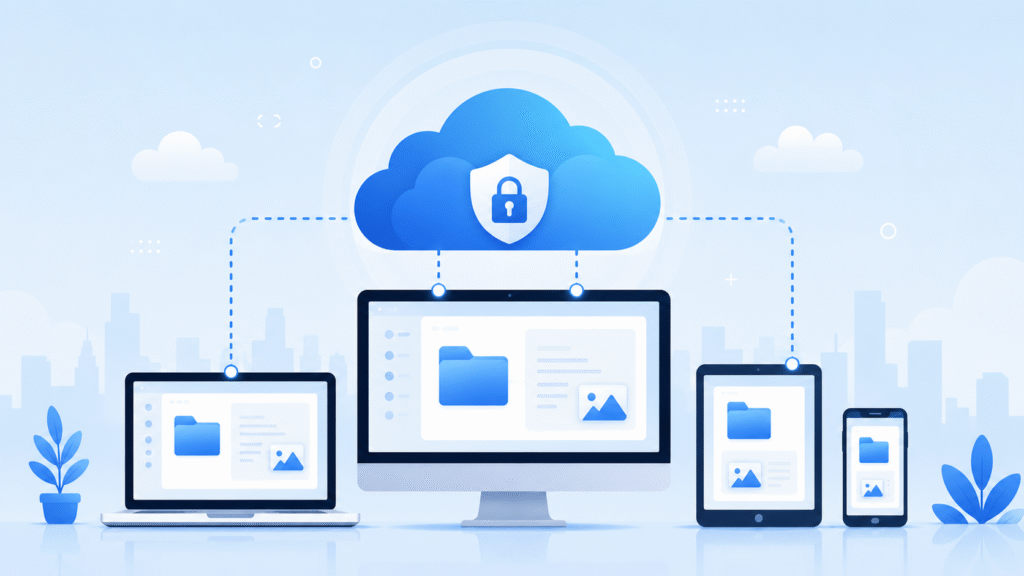
SaaS stands for Software as a Service. It’s a way of delivering software over the internet instead of installing it on your device. You access it through a browser or app, and the provider handles everything behind the scenes — the servers, the updates, the security patches. You just log in and use it.
Q: Is SaaS safe for storing sensitive business data?
Generally, yes — but it depends on the provider. Reputable SaaS companies invest heavily in security, often far more than a small business could afford to do on its own. That said, always check what data protection standards a SaaS product follows before storing anything sensitive. Look for things like SOC 2 compliance, data encryption, and clear policies on where your data is stored and who can access it.
Q: How is SaaS different from regular software?
Traditional software is something you buy, download, and install on your computer. You own a license, and updates usually cost extra or require a new purchase. SaaS is rented, not owned — you pay a recurring fee and access it online. The provider manages everything, pushes updates automatically, and your data lives in the cloud rather than on a single machine. The practical difference is that SaaS is accessible from anywhere, always up to date, and requires zero maintenance on your end.
Q: Is SaaS expensive for small businesses?
It can be — but not in the way people expect. Individual SaaS tools are usually affordable, often starting at a low monthly fee. The cost creeps up when you’re paying for ten or fifteen tools simultaneously and only actively using half of them. The businesses that manage SaaS costs well aren’t necessarily using fewer tools — they’re just more deliberate about which ones they keep and why.